
The question "does SafeAssign detect ChatGPT?" has become increasingly urgent as students navigate the intersection of AI writing tools and academic integrity policies. With ChatGPT and similar AI assistants becoming ubiquitous in education, understanding whether SafeAssign can identify AI-generated content is critical for both students and educators. This comprehensive guide examines SafeAssign's capabilities, limitations, and what you need to know about AI detection in 2026.
Understanding SafeAssign: What It Was Designed to Do
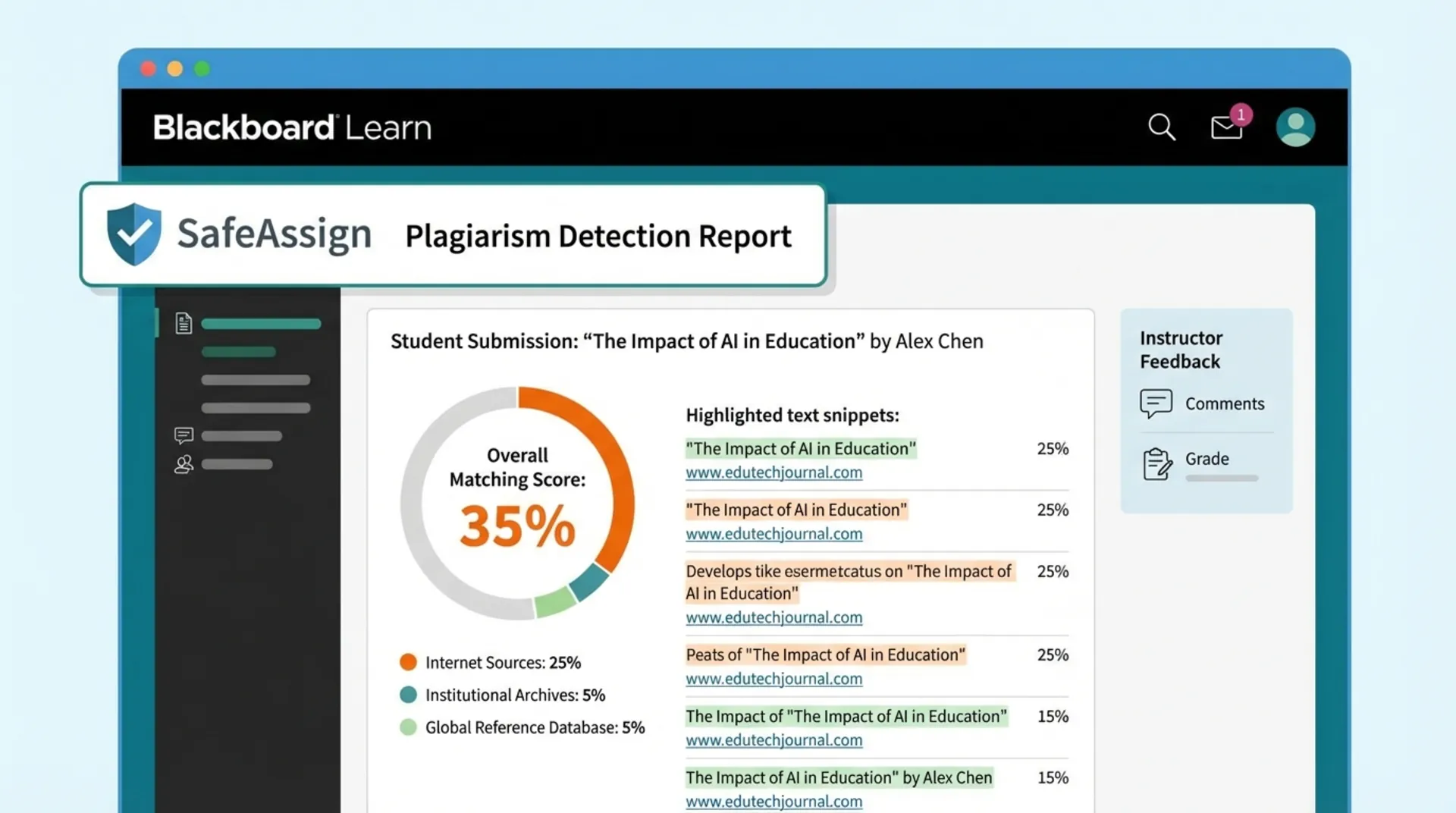
Before answering whether SafeAssign detects ChatGPT, it's essential to understand what SafeAssign actually is. SafeAssign is a plagiarism detection tool integrated into Blackboard Learn, one of the most widely used learning management systems in higher education. Developed by Blackboard Inc., SafeAssign compares submitted student work against multiple databases including:
- Internet sources and publicly available web content
- ProQuest ABI/Inform database of academic journals and publications
- Institutional document archives from participating schools
- Previously submitted student papers within the SafeAssign Global Reference Database
SafeAssign generates an "originality report" showing the percentage of text that matches existing sources, highlighting potentially plagiarized passages. This technology excels at identifying copied content but was never designed to detect AI-generated writing.
What Is ChatGPT and How Does It Generate Content?
ChatGPT, developed by OpenAI, is an advanced language model that generates original text based on patterns learned from vast amounts of training data. Unlike plagiarism, which involves copying existing content, ChatGPT creates new text that doesn't exist anywhere else. This fundamental distinction is why the question "does SafeAssign detect ChatGPT?" requires a nuanced answer.

Does SafeAssign Detect ChatGPT? The Direct Answer
The short answer is: No, SafeAssign does not directly detect ChatGPT-generated content. SafeAssign lacks the specialized algorithms required to identify AI writing patterns. However, there are specific scenarios where SafeAssign might flag ChatGPT content:
Scenario 1: Matching Previously Submitted AI Content
If another student previously submitted ChatGPT-generated text on the same topic to SafeAssign's database, and you use a similar prompt, SafeAssign might flag matching passages. This isn't true AI detection—it's simply matching against previously submitted work that happened to be AI-generated.
Scenario 2: AI Content That Includes Plagiarized Material
ChatGPT occasionally reproduces passages from its training data, particularly for well-known quotes, definitions, or common phrases. If ChatGPT's output includes such content, SafeAssign might flag these specific passages as matching internet sources.
Scenario 3: Widely Used AI-Generated Content
When many students use identical or similar ChatGPT prompts, the resulting content may be similar enough that SafeAssign flags it as matching other submissions, even though none of the students technically plagiarized from each other.
Why SafeAssign Cannot Reliably Detect ChatGPT
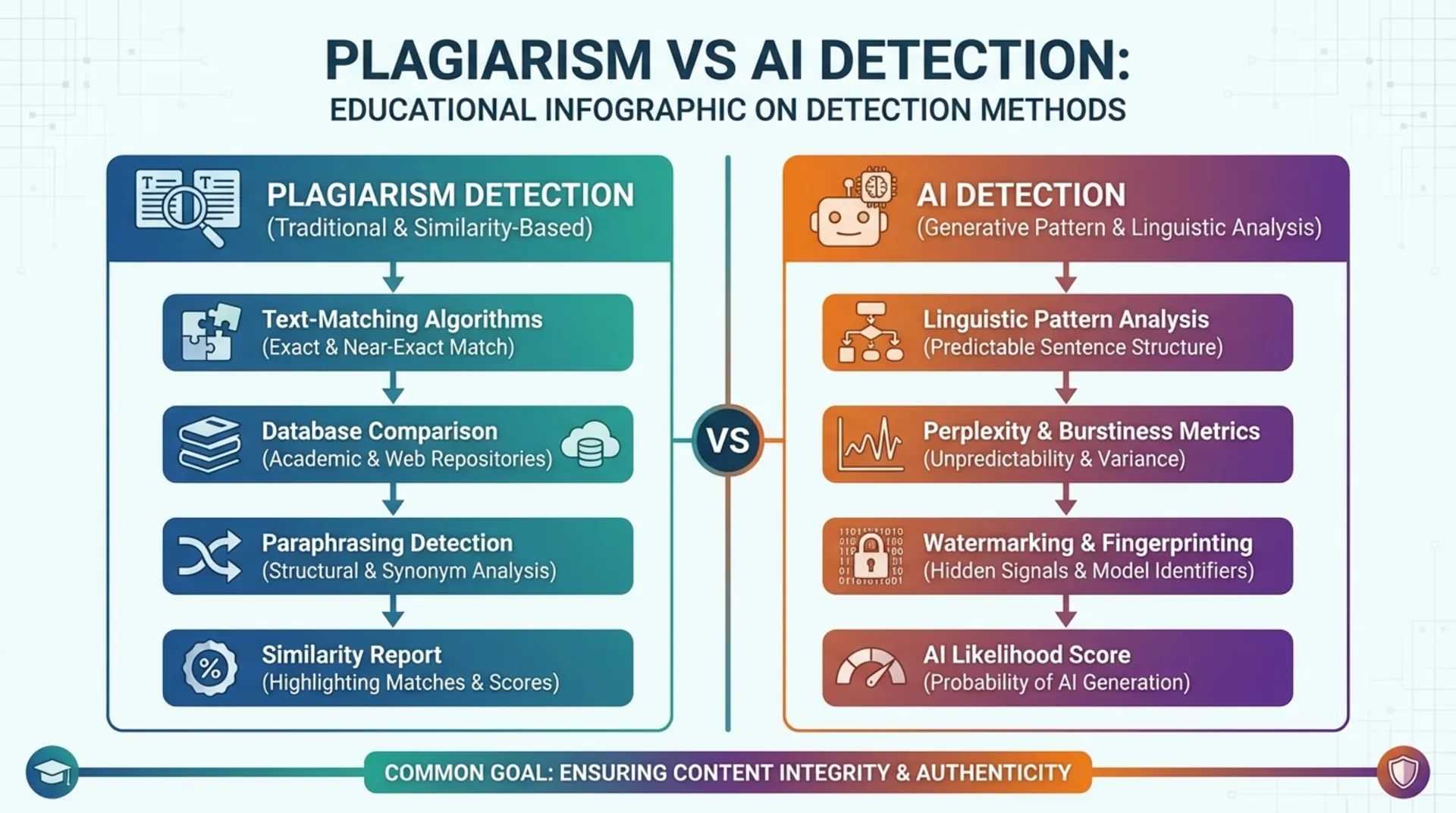
Understanding why SafeAssign doesn't detect ChatGPT requires recognizing the fundamental difference between plagiarism detection and AI detection:
Plagiarism Detection (SafeAssign's Method):
- Compares text against existing sources
- Looks for exact or near-exact matches
- Identifies copied content
- Relies on database comparisons
AI Detection (What's Needed for ChatGPT):
- Analyzes writing patterns and linguistic features
- Measures perplexity (text predictability)
- Evaluates burstiness (sentence variation)
- Examines vocabulary distribution patterns
Since ChatGPT generates original text that doesn't exist in SafeAssign's databases, the tool simply cannot identify it as AI-generated. This is not a flaw in SafeAssign—it's simply operating outside its designed purpose.
What Tools Actually Detect ChatGPT?
While SafeAssign doesn't detect ChatGPT, several specialized AI detection tools have emerged:
- Turnitin AI Detection: Integrated into Turnitin's plagiarism checker, though with notable accuracy concerns
- GPTZero: Specifically designed to identify AI-generated text with low false positive rates
- Copyleaks: Offers both plagiarism and AI detection capabilities
- Originality.ai: Focuses exclusively on AI content detection
Many institutions are supplementing SafeAssign with these dedicated AI detection tools to address the limitations in identifying ChatGPT-generated content.
Blackboard's Response to AI Detection Needs
Recognizing that SafeAssign doesn't detect ChatGPT effectively, Blackboard has been exploring partnerships and integrations with AI detection providers. Some institutions using Blackboard have implemented third-party AI detection tools alongside SafeAssign to create a more comprehensive academic integrity solution.
Best Practices for Students Using AI Tools
Understanding that SafeAssign doesn't detect ChatGPT shouldn't be interpreted as permission to use AI inappropriately. Instead, students should:
- Review institutional policies on AI tool usage
- Use AI as a brainstorming or editing assistant, not a content generator
- Ensure all submitted work reflects genuine understanding and personal voice
- Consider tools like AI Natural Write that help refine human-written content while preserving authenticity
- Remember that instructors can often identify AI-generated content through inconsistencies with your typical writing style
Frequently Asked Questions
Can SafeAssign detect any AI writing tools?
No. SafeAssign cannot detect any AI writing tools including ChatGPT, Claude, Gemini, or other language models. It only detects plagiarism by comparing against existing sources in its databases.
Will SafeAssign flag my work if I use ChatGPT for research?
Using ChatGPT for research and then writing in your own words should not trigger SafeAssign flags, as you're creating original content. However, directly copying ChatGPT's output might be flagged if similar content exists in SafeAssign's database from other submissions.
Are universities adding AI detection to SafeAssign?
Blackboard has not announced native AI detection capabilities for SafeAssign as of 2026. However, many institutions are integrating third-party AI detection tools alongside SafeAssign to address this gap.
Can professors tell if I used ChatGPT even if SafeAssign doesn't flag it?
Yes. Experienced instructors can often identify AI-generated content through inconsistencies in writing style, voice, complexity, and knowledge depth compared to your previous work or in-class writing.
What happens if I'm caught using ChatGPT?
Consequences vary by institution but typically include failing the assignment, failing the course, or academic integrity violations on your permanent record. Always check your institution's specific AI usage policies.
Conclusion
So, does SafeAssign detect ChatGPT? The definitive answer is no—SafeAssign was designed for plagiarism detection, not AI detection, and lacks the specialized algorithms needed to identify ChatGPT-generated content. While SafeAssign might occasionally flag AI content that matches previously submitted work or includes plagiarized passages, it cannot reliably identify original AI-generated text. Students should understand that the absence of SafeAssign detection doesn't mean AI usage is undetectable or acceptable. Institutions are increasingly deploying specialized AI detection tools, and instructors develop keen instincts for identifying AI-generated work. The most ethical approach remains using AI tools responsibly as learning aids while ensuring all submitted work represents genuine understanding and personal effort.