
The question "is GPTZero better than ZeroGPT?" has become increasingly important as AI detection tools play a critical role in education, content creation, and professional writing. Both platforms claim to identify AI-generated text with high accuracy, but independent testing reveals significant differences in performance, reliability, and use cases. This comprehensive comparison examines both tools to help you determine which detector best suits your needs.
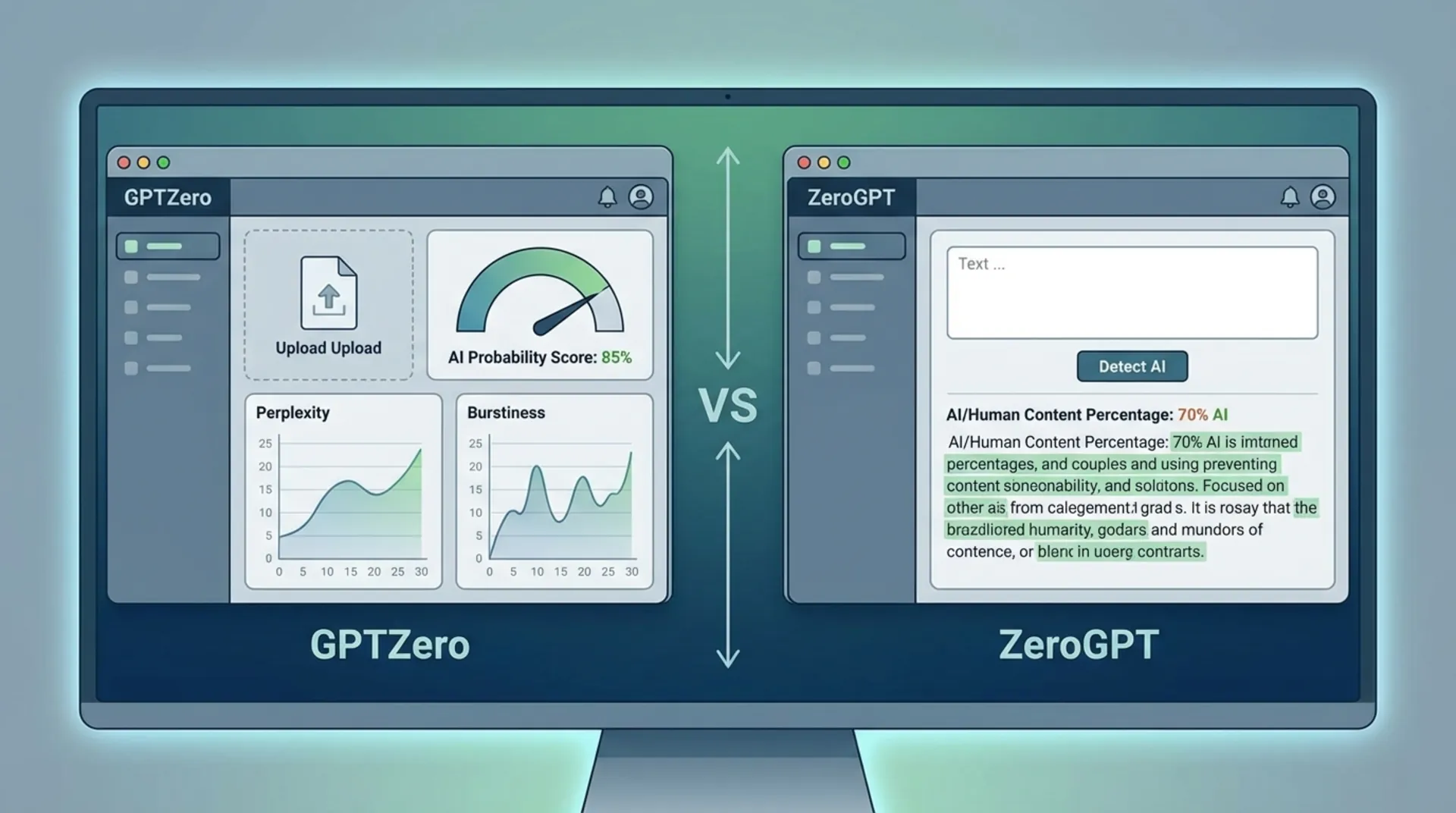
Understanding GPTZero and ZeroGPT
Before determining whether GPTZero is better than ZeroGPT, it's essential to understand each platform's origins and design philosophy.
GPTZero: Academic-Focused Detection
GPTZero was developed by a team at Princeton University specifically to help educators identify AI-generated student work. The platform emphasizes minimizing false positives to avoid wrongly accusing students of using AI. GPTZero provides sentence-level analysis with detailed explanations, making it particularly valuable for academic institutions requiring transparent detection processes.
ZeroGPT: Commercial Detection Platform
ZeroGPT emerged as a commercial alternative offering free AI detection alongside additional writing tools including paraphrasing, summarizing, and grammar checking. Built by an anonymous team, ZeroGPT focuses on providing quick detection results with a simple percentage-based scoring system.
Accuracy Comparison: The Critical Difference
When evaluating whether GPTZero is better than ZeroGPT, accuracy represents the most crucial factor. Independent testing reveals stark differences in performance across different content types.
AI-Generated Content Detection
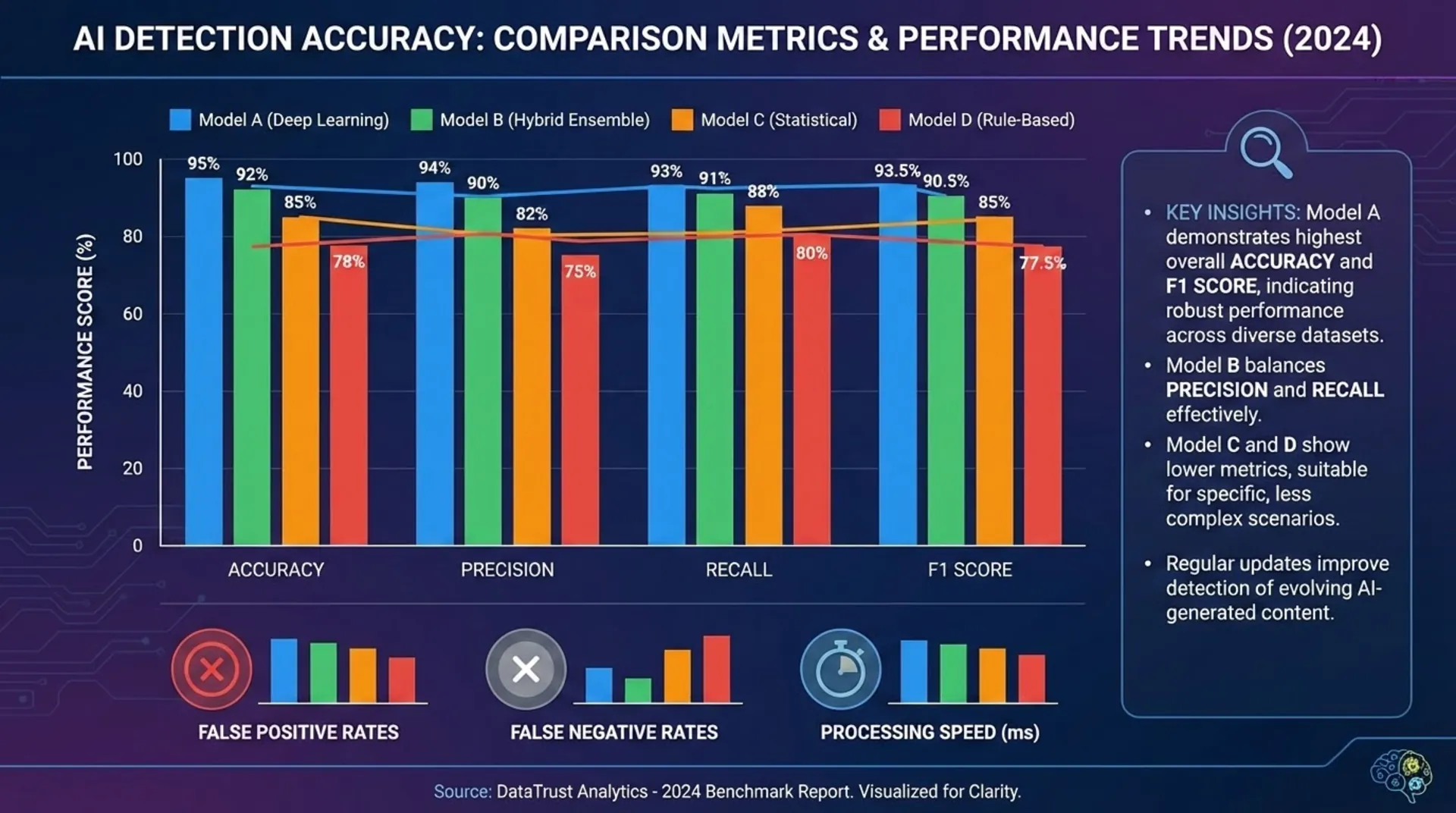
For identifying AI-generated blog content, ZeroGPT demonstrates superior performance with 95% average accuracy and a 10% false negative rate. In contrast, GPTZero achieves 84% average accuracy with a significantly higher 35% false negative rate. This means ZeroGPT more reliably catches AI-generated content in casual blog posts and similar formats.
Human-Written Content Analysis
The critical distinction emerges when analyzing human-written text. GPTZero excels here with only 4.3% average AI probability assigned to genuine human writing and a mere 3.3% false positive rate. ZeroGPT, however, assigns 30% average AI probability to human text with a concerning 50% false positive rate.
This disparity becomes even more problematic with historical texts. Testing revealed ZeroGPT assigned 76% AI probability to Arthur Conan Doyle's 1891 writing and 93% to a 2008 George W. Bush speech—content that predates modern AI by decades. GPTZero handles such content far more accurately.
Features and Functionality
GPTZero Features
- Sentence-level highlighting with detailed explanations
- Perplexity and burstiness analysis
- Batch document processing
- API access for institutional integration
- Chrome extension for quick checks
- Detailed reporting for academic use
ZeroGPT Features
- Simple percentage-based scoring
- Integrated paraphrasing tool
- Text summarization
- Grammar checking
- Free tier with ad support
- Quick detection without detailed analysis
Pricing Structure
GPTZero offers a free version with limited scans, with paid plans providing advanced features and higher scan limits. The platform targets educational institutions and professional content reviewers willing to invest in accuracy.
ZeroGPT provides a more accessible free tier supported by advertisements, with lower-cost premium options. This pricing structure appeals to individual creators and casual users requiring quick checks without detailed analysis.

So, Is GPTZero Better Than ZeroGPT?
The answer depends entirely on your specific use case and priorities.
Choose GPTZero if you:
- Work in academic settings where false accusations carry serious consequences
- Need detailed, explainable detection results
- Analyze diverse content types including literary and historical texts
- Require institutional-grade accuracy and reliability
- Can invest in higher-cost detection tools
Choose ZeroGPT if you:
- Primarily check casual blog content and similar formats
- Need quick, simple percentage-based results
- Want integrated writing tools beyond detection
- Prefer free or low-cost options
- Accept higher false positive risk for better AI detection rates
For most professional and academic applications, GPTZero's significantly lower false positive rate makes it the superior choice. The platform's design philosophy prioritizes not wrongly accusing human writers, which aligns with ethical detection practices. However, ZeroGPT's better performance on casual blog content and integrated writing tools make it valuable for content creators focused on quick checks.
The Role of AI Humanization Tools
Regardless of which detector you choose, understanding that both tools have limitations is crucial. Writers seeking to ensure their AI-assisted content passes detection should focus on authentic writing enhanced by tools like AI Natural Write, which helps refine human-written content while preserving natural voice rather than generating text from scratch.
Frequently Asked Questions
Which tool has better accuracy overall?
GPTZero demonstrates better overall accuracy, particularly for avoiding false positives on human-written content. While ZeroGPT catches more AI-generated blog posts, its 50% false positive rate on human writing makes it less reliable for high-stakes applications.
Can either tool detect all AI-generated content?
No. GPTZero's 35% false negative rate and ZeroGPT's 10% false negative rate mean both tools miss significant amounts of AI-generated content, especially when text has been humanized or heavily edited.
Are these tools reliable for academic integrity?
GPTZero is more suitable for academic use due to its low false positive rate. ZeroGPT's tendency to flag human writing as AI-generated makes it problematic for academic integrity cases where false accusations can have serious consequences.
Do these tools work on all languages?
Both tools primarily focus on English text. Performance on other languages varies significantly and is generally less reliable than English detection.
Can I use both tools together?
Yes, using multiple detection tools can provide additional confidence. However, conflicting results between tools highlight the inherent limitations of current AI detection technology.
Conclusion
When asking "is GPTZero better than ZeroGPT?", the answer is nuanced. GPTZero offers superior accuracy for avoiding false positives, making it the better choice for academic institutions, professional content review, and any application where wrongly accusing human writers carries consequences. ZeroGPT excels at detecting AI-generated blog content and provides valuable integrated writing tools at lower cost. Your specific needs, budget, and tolerance for false positives should guide your choice. For most professional applications requiring reliable, ethical AI detection, GPTZero's design philosophy and performance make it the recommended option.